A Guildford man has successfully transformed his three-bedroom semi into a technological fortress where turning on the hallway light requires two apps, a firmware update, and a working knowledge of which hub controls which bulb.
James Pritchard, 34, began his smart home journey eighteen months ago with a single voice-activated plug socket. He now owns seventeen separate devices that communicate through four different ecosystems, none of which talk to each other without his laptop acting as intermediary.
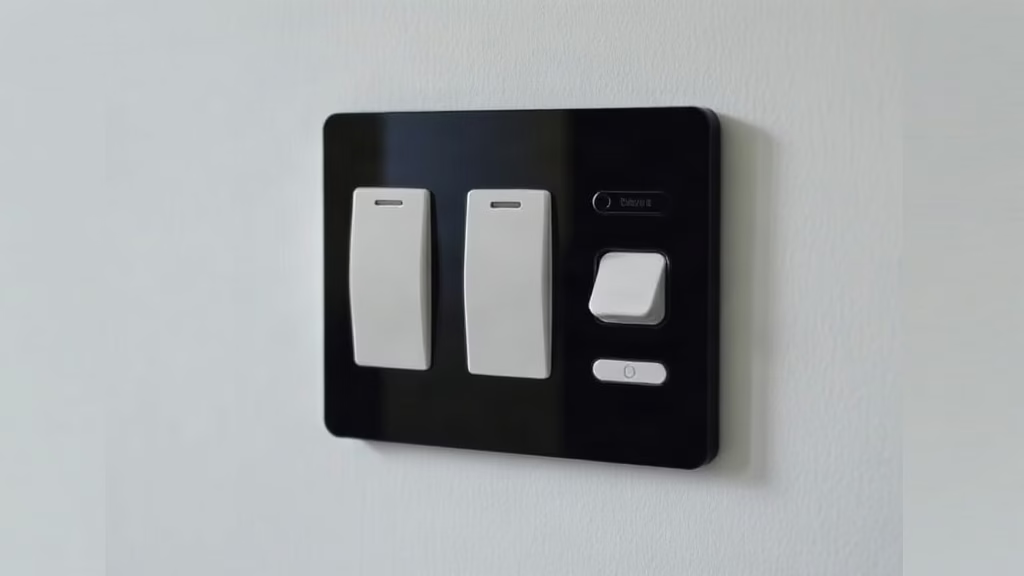
The bathroom light operates via a system that would not look out of place at GCHQ. Visitors must first ensure Bluetooth is enabled, open the LightFlow app, wait for it to locate the correct hub, select Bathroom from a dropdown menu of thirty-two zones, and finally press the toggle switch. Alternatively, they can ask Alexa, who will respond with ‘Bathroom Light is not responding’ twice before finally complying on the third attempt.
Pritchard’s mother, visiting last weekend, spent four minutes in darkness before asking her son for help.
“I just wanted a wee,” said Margaret Pritchard, 67, a retired nurse from Basingstoke. “By the time James explained about the mesh network being down and the bridge needing to reconnect, I’d lost the urge entirely.”
The kitchen now features three wall-mounted tablets, two of which have run out of battery. The third controls the coffee machine, but only after authenticating through Google Home, which requires a password Pritchard saves in a dedicated notes app.
His heating system offers sixty-three different scheduling options across eight zones. Pritchard uses two of them. The bedroom radiator has been stuck on 23 degrees since July after an update changed the API protocol.
Guests are provided with a printed guide. It runs to four pages.
“The problem is each manufacturer thinks they’re building the central ecosystem,” explained Dr. Helen Xu, a technology researcher at Imperial College London who studies domestic IoT adoption. “What you end up with is seventeen different kingdoms all shouting at each other through increasingly expensive interpreters.”
Pritchard maintains the investment has been worthwhile. He can now turn off the living room lamp from his office in Woking, a problem he did not have before spending £340 on Philips Hue bulbs.
The system offers significant advantages over traditional switches, he insists. It merely requires that all household members keep their phones charged, updated, and within Bluetooth range at all times.
His partner Emma has started keeping a torch in her handbag.
The couple are currently experiencing what Pritchard describes as “a minor compatibility issue” with the bedroom lights. They have been operated via the original wall switch for three weeks while he investigates firmware solutions. Emma calls this “having lights that work.”
Pritchard is already eyeing smart radiator valves for the spare room. They are currently on sale for £89 each. He needs six.