FOR IMMEDIATE RELEASE
Britain’s cloud cover is delighted to confirm that the Leonid meteor shower will once again go unobserved across most of the United Kingdom. The peak is expected in the small hours of mid-November. Visibility is expected to be nil.
This marks Stratus’s thirty-ninth consecutive Leonid engagement. The record is unbroken. It has been checked twice, by us.
A Particularly Dark Sky This Year
This year’s new moon has led astronomers to promise exceptionally dark skies. Stratus welcomes the news. A bright moon only gives people false hope. A dark sky gives them nothing to look at, and that is where we come in.
“We don’t do it for the recognition,” said Helen Marsh, Head of Communications at Stratus. “We simply turn up and do the work. Some nights that means a thin veil of altostratus. Other nights it means eight oktas of unbroken grey. We are happy either way.”
Dark Sky Site Disappointment Index
Stratus is pleased to launch its Dark Sky Site Disappointment Index (DSSDI), which rates Britain’s best stargazing locations on a scale of one to ten. Higher is better. Better means worse.
- Galloway Forest Park: 9.7
- Bannau Brycheiniog: 9.8
- Northumberland National Park: 9.4
- Cairngorms: 8.9
The Cairngorms figure reflects a ten-minute clear spell at 3.12am last year. A review was held. Nobody was looking up at the time, so no further action was taken.
Flask and Folding Chair Partnership Programme
Stratus is proud to expand its Flask and Folding Chair Partnership Programme. The scheme works with manufacturers of camping chairs, tartan flasks and thermal blankets. Over 41,000 chairs have been deployed so far. The average chair is sat on for ninety minutes before somebody says, “Shall we call it?”
Members receive a complimentary drizzle at 1am, timed to coincide with the second flask of tea.
Graham Pettifer, chair of the Market Harborough Astronomical Society, has taken part for nineteen years. “I drove two hours to a dark sky site near Kielder,” he said. “I sat in a layby for four hours. I saw what I believe was a very large sheep. I’ll be back next year. Obviously.”
Dr Fiona Ashworth, a lecturer in atmospheric physics at the University of Reading, said the cloud holds a significant home advantage. “In a British November, the odds are not so much stacked as laminated,” she said.
About Stratus
Stratus has been over Britain since roughly 1066. Notable engagements include Halley’s Comet in 1986, the 1999 total solar eclipse in Cornwall, and most Augusts. The company is headquartered everywhere. It employs approximately all of it. It has never taken a sick day and has never once been asked to leave.
Looking Ahead
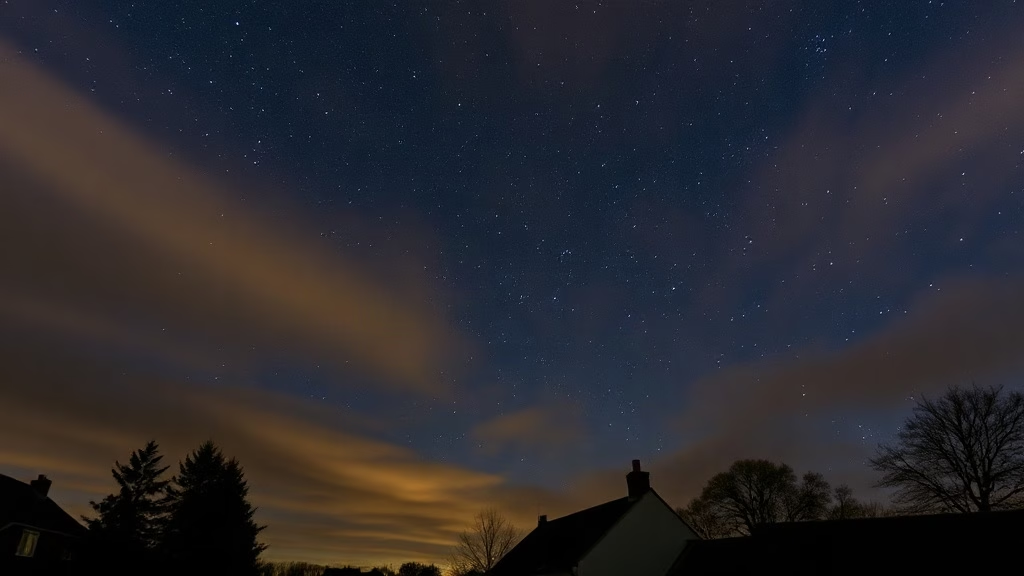
Stratus is already preparing for the Geminids, which peak in mid-December. Up to 150 meteors an hour are forecast. Rotating shifts have been agreed. Low stratocumulus will cover the early evening, with a thickening layer overnight and a light mist for the drive home.
Astronomers are advised to bring a flask.