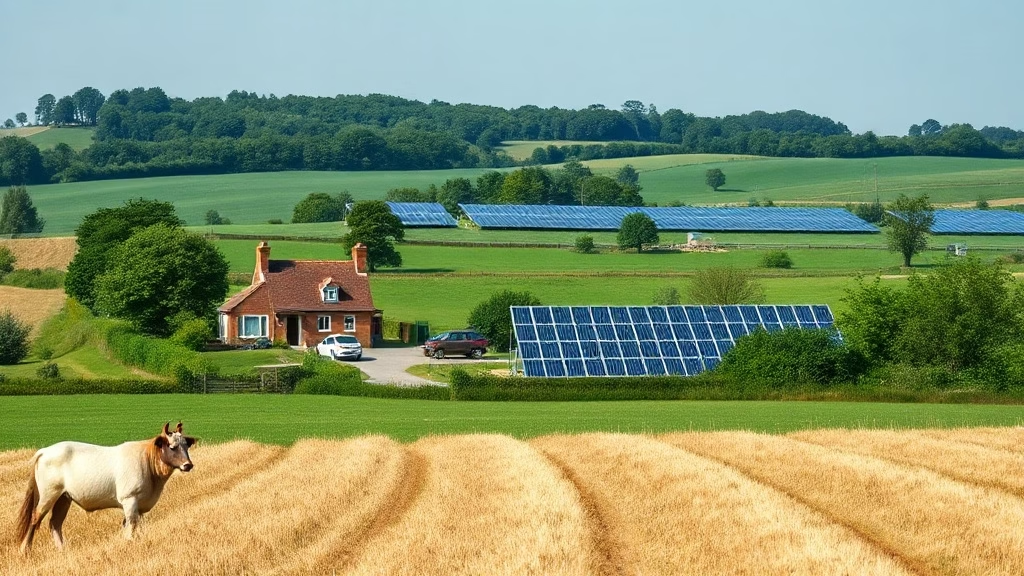
Energy company Meridian Power Solutions has identified a 47-acre plot of unspoilt countryside in North Yorkshire as the perfect site for a major solar farm and battery storage facility, concluding an exhaustive two-week search for land that had not yet been earmarked for renewable energy infrastructure.
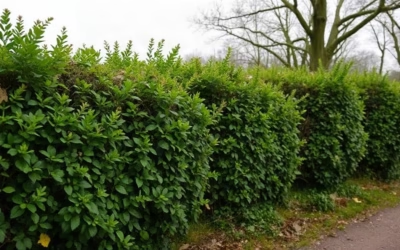
The site, which currently consists of hedgerows, wildflower meadows and what surveyors described as ‘an unreasonable amount of biodiversity’, was chosen after satellite imagery confirmed it as one of the last remaining patches of British countryside not already covered in solar panels, wind turbines, or planning notices.
“We conducted a rigorous site assessment,” said Graham Fletcher, Meridian’s Head of Strategic Land Acquisition. “The area scored exceptionally well on all our key criteria. It’s green, it’s rural, and most importantly, it doesn’t have any renewable energy infrastructure on it yet. That’s essentially a market failure we’re correcting.”
The proposed development will see the installation of 180,000 solar panels across the site, along with battery storage units roughly the size of a Premier Inn. Local residents who objected to the plans on the grounds that they quite liked looking at fields were informed that they would soon be able to look at something far more environmentally responsible instead.
Planning documents submitted to the council note that the scheme will make a vital contribution to the UK’s net zero targets, whilst acknowledging in paragraph 47, subsection C, that the actual countryside will need to be completely removed first. A spokesperson confirmed that all grass, trees, and wildlife would be relocated to a nearby area currently under consideration for a wind farm.
“People don’t seem to grasp that you can’t save the environment without significantly altering the environment,” said Jennifer Hartley, a planning consultant working on the application. “Yes, this particular piece of land will become an industrial energy site, but that’s a small price to pay for ensuring we have enough renewable capacity to power all the electric vehicles that will soon be driving past it on the newly widened A-road.”
The development has been welcomed by government officials, who pointed out that solar farms represent a much more sustainable use of agricultural land than the previous model of growing food on it. A Department for Energy Security and Net Zero statement noted that Britain’s remaining countryside had been performing significantly below its potential as an energy generation asset.
Local parish councillor David Morrison said his main concern was ensuring adequate screening around the perimeter. “We’ve been assured there’ll be a hedge,” he said. “Not the hedge that’s there now, obviously. That one’s in the way. But a new one, about three feet high, which should block the view of the panels almost entirely if you’re sitting down and not looking directly at them.”
Planning officers are expected to approve the application next month, citing the urgent need for renewable energy infrastructure and the fact that there’s barely anywhere left to put it.