A team of researchers at Imperial College London has inadvertently developed a complete cure for hangovers while attempting to synthesise cost-effective rocket propellant. The discovery has plunged the Treasury into crisis and prompted emergency meetings across the brewing industry.
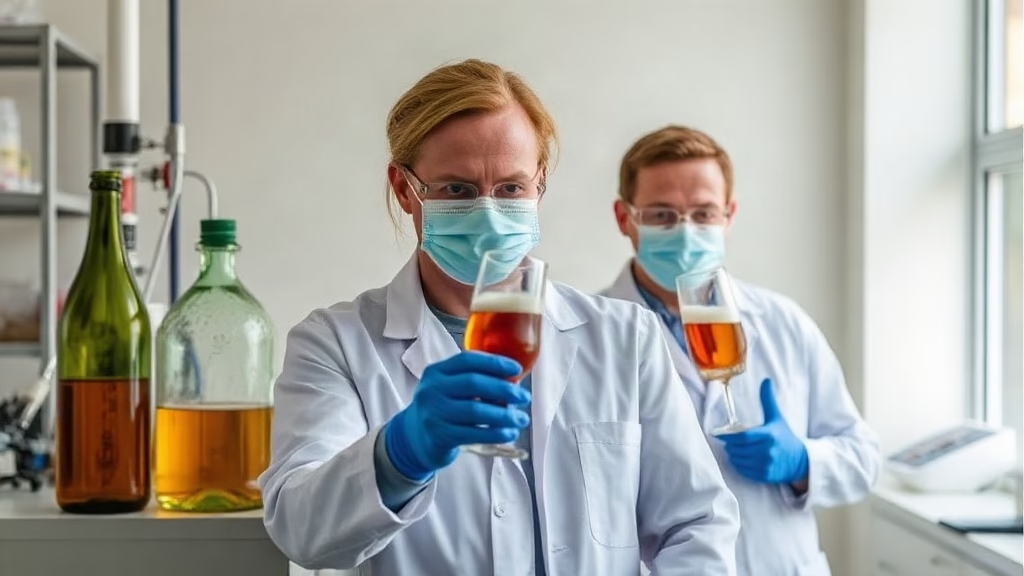
The enzyme compound, designated IC-47, was designed to break down ethanol derivatives for use in sustainable aviation fuel. During safety trials, a laboratory technician drank three pints and a Jäger bomb, took the enzyme, and woke up the next morning feeling fine. He also finished a 10k run and described the experience as “unsettling.”
Within hours of the findings being peer-reviewed, the Chancellor was reportedly found weeping in his office. Treasury forecasts suggest the cure could eliminate up to £48 billion in annual alcohol duty, takeaway sales, paracetamol purchases, and lost productivity that the economy has come to depend upon.
“I genuinely don’t understand the problem,” said Dr. Rebecca Winters, lead researcher on the project. “We’ve eliminated a significant source of human suffering. The Chancellor kept asking me if we’d considered the Greggs breakfast rollover effect. I had to explain that’s not a scientific term.”
British pub chains have seen their share prices drop by 34% since the announcement. The British Beer and Pub Association has formally requested that the research be classified under the Official Secrets Act.
“This threatens the entire social contract,” said Martin Firth, chief executive of Greene King. “People go to the pub because they accept the implicit bargain. Pleasure now, suffering later, repeat weekly. Remove the suffering and the whole thing falls apart.”
The enzyme works by accelerating the breakdown of acetaldehyde and preventing the inflammatory response that causes hangover symptoms. It costs approximately 74p per dose. Trials involved 200 participants, though 60 were excluded after admitting they’d never actually experienced a hangover, which researchers deemed “statistically improbable and personally annoying.”
Economists warn that eliminating hangovers could trigger a cascade of economic consequences. The breakfast meal deal sector could contract by 40%. Sales of fizzy drinks, fried food, and films under 90 minutes would all decline substantially. At least four major pharmaceutical companies have begun lobbying for the research to be suppressed.
Dr. Winters remains baffled by the response. “One MP asked me if I’d considered what this would do to Sunday football attendance. Another wanted to know if we could make it work less effectively. I studied chemical engineering for nine years and nobody prepared me for this.”
The research team has applied for emergency patents, though legal experts suggest the cure may be preemptively banned under provisions typically reserved for bioweapons. The Bank of England has scheduled an emergency interest rate meeting.
Imperial College has declined to comment on reports that several of their senior donors have requested the laboratory’s immediate closure.