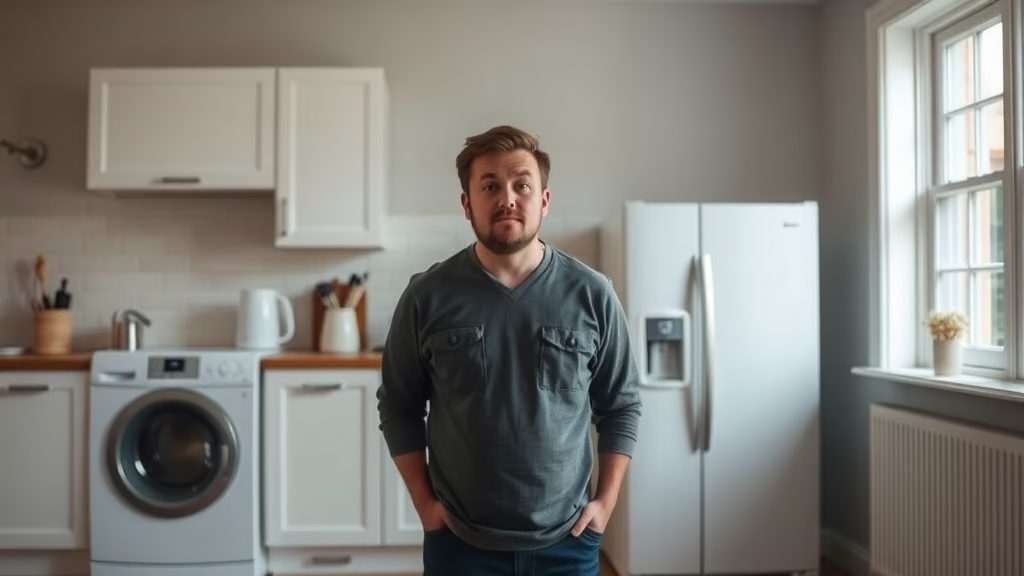
A Manchester resident has confirmed that his investment in home automation technology has successfully transformed his three-bedroom semi into a place where he must negotiate with inanimate objects on a nightly basis.
Tom Griffiths, 34, purchased seventeen smart devices over the past eighteen months. He now spends an estimated forty minutes per day in supplicating conversation with his possessions.
“I say please to the bins,” Griffiths admitted. “Both of them. The recycling one especially. It gets funny if you don’t acknowledge it properly before it’ll open.”
The bins cost £89 each. They open with a wave. Sometimes.
Griffiths’ evening routine now includes complimenting the thermostat on maintaining 19 degrees, thanking the lights for turning on when requested, and apologising to the coffee machine when it fails to connect to the WiFi. The coffee machine is not technically a smart device. It simply sits near the smart kettle and Griffiths has started including it out of politeness.
“You have to stay on their good side,” he explained. “Last week the kettle ignored me for two days after I called it ‘unreliable’ within earshot.”
His partner, Jenny Marsh, has watched the transformation with concern. “He used to be quite assertive,” she said. “Now he tells Alexa she’s doing a great job before asking her to play any music. He thanks the robot vacuum for cleaning even when it’s just been banging into the same chair leg for twenty minutes.”
The couple’s doorbell camera, which cost £179, now requires what Griffiths describes as “the right tone” before it will display footage. He has begun greeting it in the morning.
Dr Claire Venables, a researcher in human-computer interaction at Imperial College London, said the phenomenon is increasingly common. “We’re seeing a generation of consumers who’ve essentially been trained by their purchases to behave like supplicants in their own homes,” she noted. “One participant in our study admitted to saying sorry to his toaster. It wasn’t even a smart toaster.”
Griffiths maintains the system works well once you understand the dynamics. “You just have to respect them,” he said. “This morning I told the bathroom mirror it was looking good. Cleared right up. Well, most of it. There’s still a bit in the corner that won’t demist, but I think that’s because I was sarcastic about the shower speaker last Tuesday.”
He has recently installed a smart lock on the front door. It opens via facial recognition, fingerprint, or PIN code. So far it has successfully recognised him twice. He now keeps a traditional key in a nearby planter and apologises each time he uses it.
“I don’t want the lock to think I don’t trust it,” Griffiths said. “That’s how you end up locked out.”
When asked if he’d considered returning to conventional appliances, Griffiths looked horrified. “And let them know I’d given up on them?” he said. “Absolutely not. We’re in this together now.”