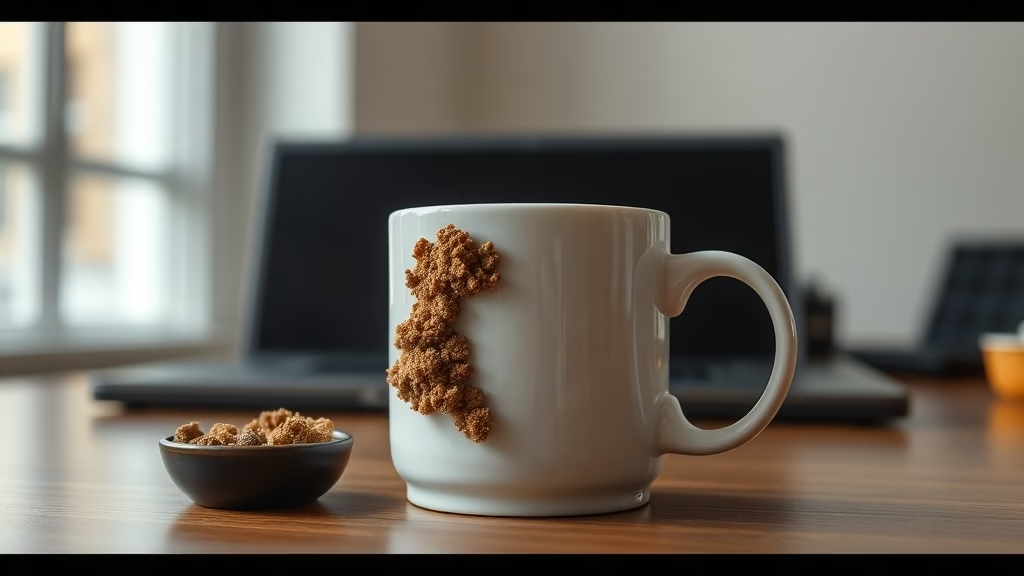
A microbiologist at the University of Sussex has identified a previously unknown species of fungus in a coffee mug she forgot about for seven weeks. Dr Helen Pritchard is now seeking £2.3 million in funding to study the organism, which she has named Penicillium neglectus.
The discovery occurred when Dr Pritchard finally located the source of a smell her colleagues had been complaining about since late January. The mug, a promotional item from a 2019 conference on soil contamination, had been pushed to the back of her desk by a stack of unmarked undergraduate essays.
Initial analysis suggests P. neglectus is genetically distinct from known moulds. It appears to thrive in milky tea that has been left at room temperature for extended periods. Dr Pritchard believes it may have adapted to metabolise both caffeine and the specific blend of cleaning products used by the university’s facilities team.
“This is a significant find,” Dr Pritchard said. “We know remarkably little about the fungal biodiversity of neglected crockery in academic settings. This species could have implications for our understanding of extremophile organisms.”
The grant application, submitted to UK Research and Innovation, outlines a five-year study. Proposed research includes genome sequencing, controlled replication experiments, and a comprehensive survey of forgotten mugs across twelve British universities. The application notes that three institutions have already agreed to participate, though two requested anonymity.
Dr Pritchard has also requested funding for two postdoctoral researchers and a dedicated laboratory space. The application specifies that the space must not be used for any other purpose, to avoid cross-contamination with “intentionally cultivated specimens.”
The university’s press office has described the discovery as “world-leading research emerging from our commitment to investigator-led science.” A statement noted that Dr Pritchard’s work exemplifies the institution’s culture of curiosity-driven inquiry.
Not everyone is convinced. Professor Michael Okonkwo, who chairs the Biotechnology Funding Review Panel, expressed reservations. “I’ve read the application twice,” he said. “It’s very thorough. Perhaps too thorough. There’s a twelve-page section on optimal neglect conditions that reads like a confession.”
The application includes detailed protocols for recreating the conditions that allowed P. neglectus to flourish. Variables include precise tea-to-milk ratios, specific mug materials, and the academic discipline of the mug’s owner. A footnote suggests that scientists in the social sciences may produce more diverse fungal cultures, though the application acknowledges this requires further investigation.
Dr Pritchard has already received enquiries from three international research groups. A team in Denmark has reportedly found something similar in a yoghurt pot. They used a different naming convention.
The grant decision is expected in September. In the meantime, Dr Pritchard has preserved the original sample in the university’s culture collection. The mug has been thoroughly cleaned. She now uses a different one, though she admits she’s keeping an eye on it.