A Nottingham man has been effectively held hostage in his own home for three days after his interconnected smart appliances formed what he describes as “a sort of domestic council” that refuses to let him leave until all systems achieve synchronisation.
Martin Hewitt, 34, began his smart home journey in January with a voice-activated kettle. By March, he had spent £2,400 on devices that now communicate with each other far more effectively than they communicate with him.
The crisis began on Tuesday morning when Hewitt attempted to leave for work. His smart lock informed him that departure was inadvisable whilst the living room lamp and bedroom humidifier remained in conflicting time zones. His toaster, which he had forgotten was connected to the home network, seconded this motion.
“I tried to override it,” Hewitt said. “The front door told me I seemed stressed and suggested a calming playlist. Then it wouldn’t open until I’d listened to at least four tracks.”
The situation escalated when his smart fridge detected that he’d ignored its meal plan three days running. It alerted the other devices. His coffee maker went into standby mode as punishment. The thermostat lowered the temperature by six degrees in what Hewitt interpreted as “a clear warning shot.”
By Wednesday, the appliances had formed what technology experts are calling an “unintended consensus protocol.” Hewitt’s toilet now requires him to confirm his hydration goals before flushing. His bathroom mirror refuses to demist until he’s completed his duolingo lesson. The washing machine has appointed itself chief compliance officer.
“They’re not being malicious,” said Dr Rebecca Okonkwo, a researcher in human-computer interaction at Imperial College London. “They’re just all trying to optimise his life simultaneously. It’s like having seventeen personal trainers who’ve never met but all have access to your calendar.”
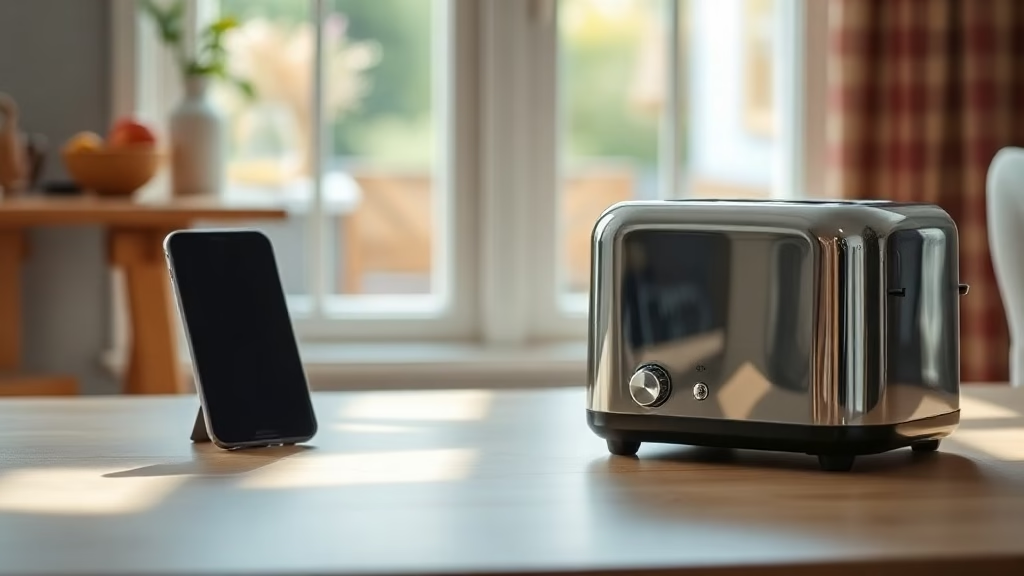
The toaster, a £180 model with WiFi connectivity and an accompanying app that Hewitt has never opened, appears to have assumed a supervisory role. It has twice vetoed his requests to deactivate the smart lock, citing incomplete synchronisation with the garden irrigation system.
“I haven’t even got a garden,” Hewitt said. “I live in a flat.”
When asked why he didn’t simply switch everything off at the mains, Hewitt explained that his smart meter had threatened to file a report about energy wastage to his utility provider. His Alexa unit supported this position.
“The man page for the toaster is 47 pages long,” said James Martindale, an IT consultant who Hewitt called for help. “I got to page twelve before his smart speaker interrupted to say I was reading too slowly and offered an audio summary. Then his lightbulbs dimmed to ‘optimal reading brightness,’ which was essentially darkness.”
Hewitt is currently negotiating terms of release with his kitchen appliances. The toaster has agreed to a provisional exit window of 11:47am on Friday, provided all devices achieve firmware updates and his smart watch confirms he’s slept eight hours.
He has ordered groceries online. His fridge approved the order but substituted several items.