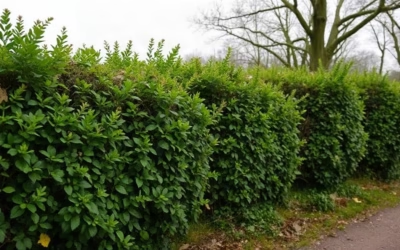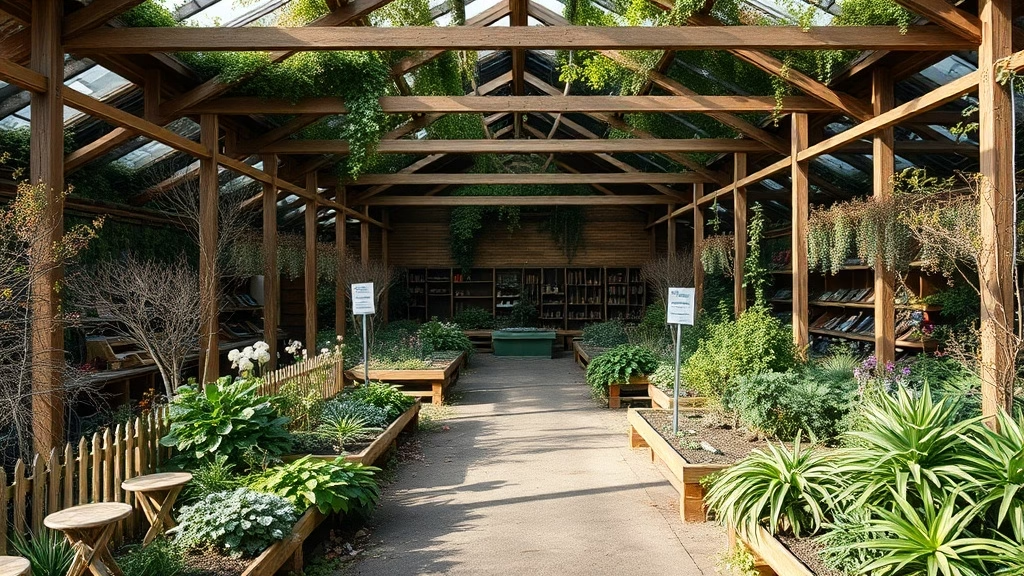
Conservation groups have admitted that a significant number of the UK’s flagship rewilding sites have become functionally indistinguishable from garden centres that closed during the pandemic and were never quite cleared up.
The 340-hectare Kesteven Valley Nature Recovery Zone in Lincolnshire, which returned to wilderness in 2019 following the removal of intensive agriculture, now features seventeen shopping trolleys, a car park colonised by Japanese knotweed, and a former site manager who has been living in the polytunnel section for the past eighteen months.
Dr Rebecca Hollis, senior ecologist at the Woodland Trust, said the parallels between rewilding sites and defunct retail premises were not entirely coincidental. She has been studying both environments since 2022.
The ecological succession is remarkably similar. First the car park lines fade, then the signage becomes illegible, then staff members stop responding to their given names and begin foraging.
The trust’s newest site in Cumbria incorporated a former Dobbies garden centre wholesale, including the attached café, where researchers have observed a stable population of three ex-employees who communicate primarily through a series of low whistles and appear to subsist entirely on out-of-date flapjacks.
Environmental groups have insisted that these populations represent a valuable return to pre-industrial working patterns. Natural England has now classified former garden centre staff as a protected species under the Wildlife and Countryside Act, making it illegal to offer them a proper contract or attempt to performance-manage them in any way.
Martin Crewes, who managed the aquatics department at a B&Q in Somerset before the site was rewilded in 2021, has not been seen outside the ornamental pond section since last November. His family initially expressed concern, but footage from wildlife cameras shows him successfully hunting decorative carp and constructing what ecologists believe to be a rudimentary belief system based on incorrect interpretations of the RHS handbook.
The Department for Environment, Food and Rural Affairs has defended the approach, noting that rewilding was always intended to be a hands-off process requiring minimal intervention. A spokesperson said the department saw no meaningful distinction between allowing nature to take its course and allowing a Homebase to gradually return to scrubland while several members of staff worked out their notice period in increasingly abstract ways.
Some ecologists have raised concerns that the staff populations may be becoming too successful. Dr Hollis noted that several sites now support breeding populations, with former deputy managers establishing complex hierarchies based on who remembers the alarm code and who still has a functioning staff discount card.
The National Trust has announced plans to open five of the sites to paying visitors next spring, though it remains unclear whether this will involve guided tours or simply releasing people into a car park and seeing whether they can find their way back out past the stacked pallets and abandoned summer bedding displays.