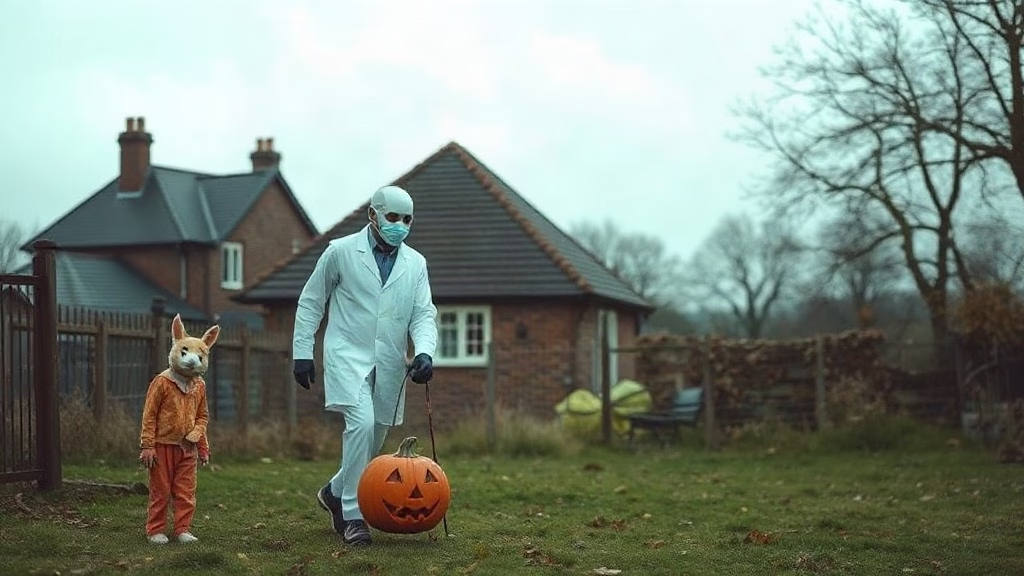
Eleven cryptozoologists left a lay-by outside Rotherham at dusk on Thursday, armed with a laminated map, two torches and a thermos of oxtail soup. Their quarry: an NHS dentist, reportedly accepting new patients. The creature was last seen on a Tuesday. Nobody can say which Tuesday.
The only photograph is a blur taken through a car windscreen from roughly two hundred metres. It shows a figure in what experts believe is a lanyard.
‘It could be a lanyard. It could be lens flare. It could be a man holding a lanyard,’ said Dr Helen Prowse, a folklorist and the expedition’s leader. ‘We have enhanced the image. It is now a larger blur.’
Signs of Life
Evidence is thin but persistent. Gareth Mottram, 41, a van driver from Maltby, says he definitely heard a drill in the distance last month. ‘High-pitched. Whining. Then it stopped, and I thought, that’s either a dentist or next door’s strimmer.’ He has since checked. It was the strimmer.
Derek Aspinall, 67, a retired joiner, says his grandfather saw one in 1994. ‘He said it was in a building with a waiting room and a fish tank. It asked him to ring back in January.’ Mr Aspinall’s grandfather did not ring back in January. He was, by then, quite attached to the idea of simply having the tooth fall out.
Habitat
The NHS dentist is thought to favour practices with a sign in the window reading ‘Now Registering’, though Dr Prowse warns this is often a decoy. ‘Closer inspection reveals the small print. Private patients. Or a waiting list, which is a different animal. It is a list, and you are on it, and that is all anyone will say.’
The stakes are not academic. Tooth extraction remains one of the most common reasons for young children to be admitted to hospital in England. Researchers describe this as ‘not ideal for a species we cannot locate’.
The Sweet Season
The expedition was timed deliberately. On 31 October, millions of children will be handed fun-size chocolate bars by strangers at the door, while parents quietly eat a third of the bowl in the hallway. The window between the first sugar rush and the first toothache is narrow, and the creature is said to be most active during it. Or least inactive. The data is poor.
The team has brought bait. Poppy Ashworth, seven, has donated a wobbly front tooth, sealed in a sandwich bag and attached to a tripod with masking tape. She has been promised 50p and a fair hearing.
‘She’s very brave about it,’ said her mother, Joanne Ashworth, a school receptionist. ‘I rang forty-three practices in September. I have a spreadsheet. I have a colour code. Green means they picked up. There is no green.’
By 2am the team had checked six car parks, a retail park and a former bank. At one point a light was seen on in a surgery near the ring road. Researchers approached on foot, in silence, with the thermos held low. It was a cleaner. She was very nice about it and suggested they try 111.
Dr Prowse has not ruled out the possibility that the creature exists only in folklore, alongside the weekend GP appointment and the pothole that gets fixed. Poppy’s tooth remains on the tripod. It has not, at the time of writing, been approached by anything.