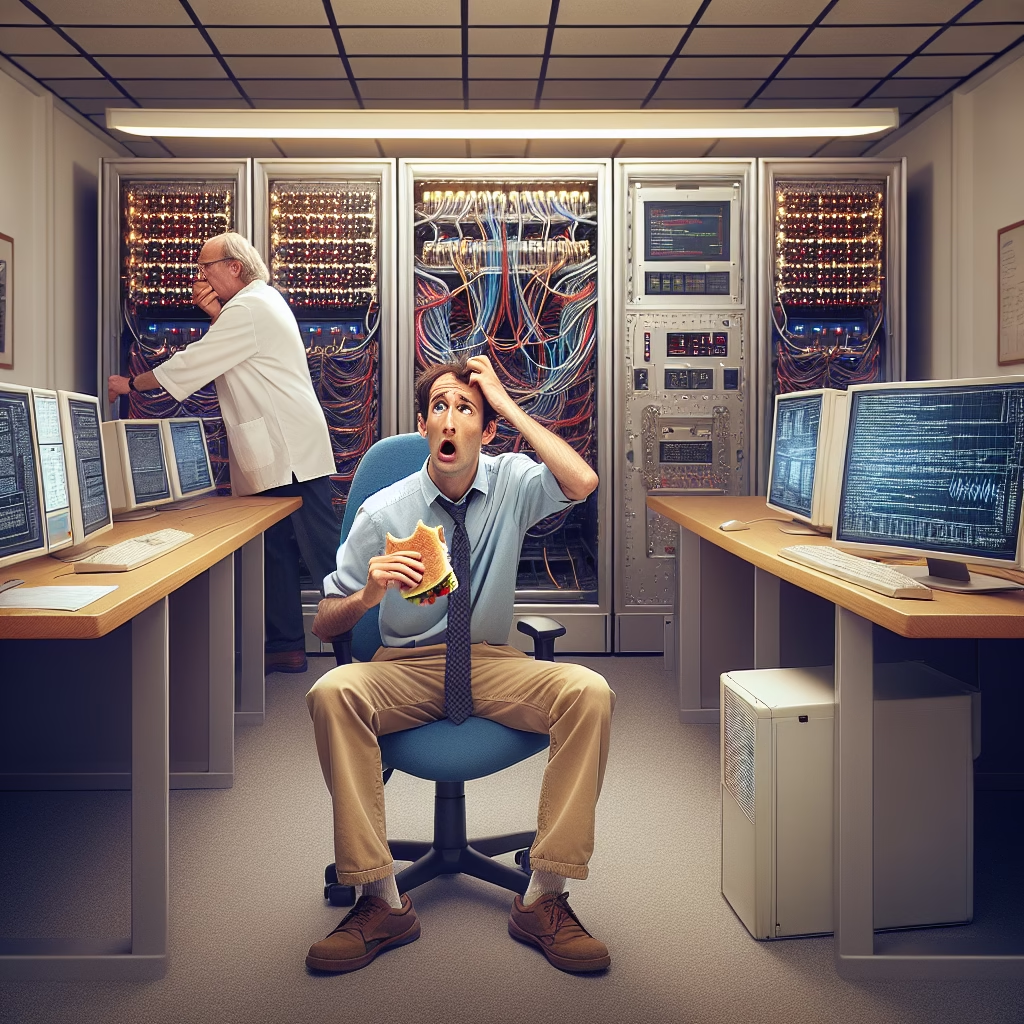
A quantum computer at the Advanced Computing Research Facility in Oxfordshire has successfully demonstrated quantum advantage by solving a problem beyond the capabilities of classical computers. The problem was what Dr. James Rothwell should have for lunch.
The breakthrough came after eighteen months of development and £4.3 million in funding from UK Research and Innovation. The system, which operates at temperatures colder than deep space, processed 10^47 possible meal combinations across multiple quantum states simultaneously before arriving at its conclusion.
The computer’s answer: a superposition of sandwich and salad.
“This represents a genuine milestone in quantum computing,” said Dr. Rothwell, the facility’s lead researcher and reluctant lunch consultant. “We’ve definitively proven that our system can tackle problems that would take conventional computers millions of years to solve. Unfortunately, we didn’t specify which problems we actually wanted solved.”
The incident occurred when Dr. Rothwell, faced with the facility’s limited canteen options, jokingly entered his lunch dilemma into the quantum processor during a routine calibration. The system interpreted the query as a complex optimisation challenge, accounting for nutritional content, price points, previous meal history, and what Dr. Rothwell described as “an unsettling number of variables I didn’t know were being monitored.”
The computation required 340 qubits and took six hours. A coin flip would have taken three seconds.
“The fascinating aspect is that the answer exists in quantum superposition until observed,” explained Dr. Nina Chowdhury, the facility’s quantum applications director. “Essentially, Dr. Rothwell is meant to have both lunch options simultaneously until he makes a selection, at which point the waveform collapses. We’ve suggested he eat half of each, but he’s being difficult about it.”
The research team has published their findings in Nature Quantum Information, though the paper’s abstract simply reads “Don’t.”
When asked whether the system might be applied to other everyday decisions, Dr. Chowdhury confirmed they had considered it. “We did briefly discuss using it to optimise the department’s tea rotation,” she said. “But given the strong feelings about milk-first versus milk-after, we worried it might achieve sentience and immediately resign.”
The quantum computer has since been reprogrammed to focus on drug discovery and materials science. Dr. Rothwell had a meal deal from Tesco. The sandwich and salad collapsed into a state of cheese and pickle, observed at 1:47pm, consumed with regret by 2:15pm.
The facility’s annual energy bill is £890,000.