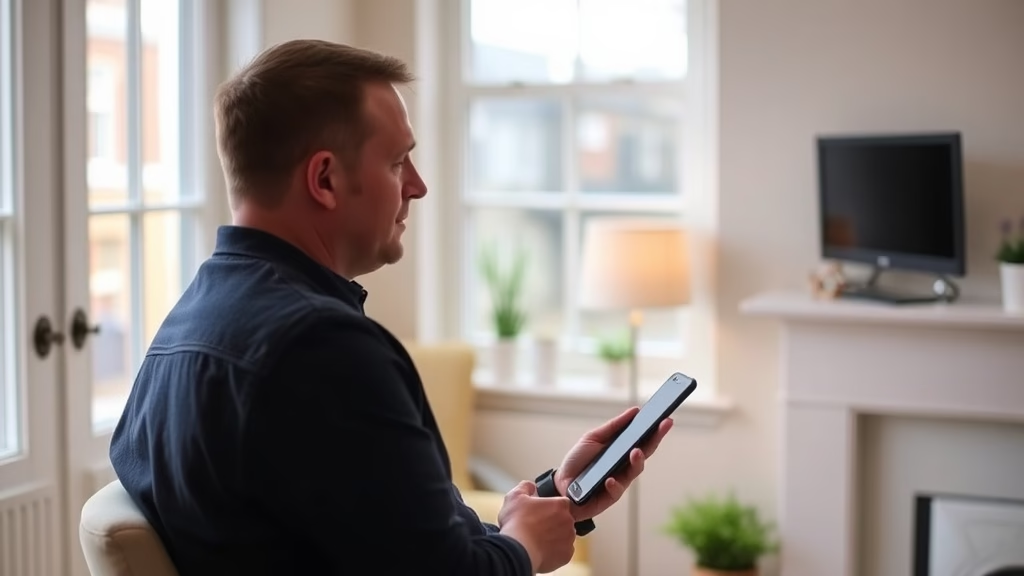
A Nottingham resident who invested heavily in transforming his three-bedroom semi into a “home of the future” now dedicates approximately 40 minutes each day to investigating why his hallway light refuses to acknowledge his existence.
James Thornton, 34, purchased seventeen smart bulbs, four hubs, two voice assistants, and a video doorbell that occasionally shows him footage from what appears to be someone else’s porch. The system, when functioning, allows him to turn on lights using his voice, his phone, or a wall-mounted tablet. When not functioning, which is most of the time, it allows him to develop a working knowledge of network protocols and the complaints procedures of six different manufacturers.
“The convenience is incredible,” Thornton said, opening the third app on his phone at 7:45am. “I just say ‘Alexa, turn on the kitchen lights’ and then spend fifteen minutes working out why Alexa claims the device is unresponsive despite it appearing online in the SmartThings app but offline in the Philips Hue app.”
His morning routine now includes checking whether the zigbee hub has crashed overnight, confirming that the latest mandatory firmware update hasn’t reassigned all his devices to a default room called “Living Room 1”, and rebooting the router while his coffee goes cold. Yesterday, he discovered his bedroom lamp had been controlled by a previous owner’s Google account for the past three months.
The light switch Thornton replaced had been installed in 1987. It worked immediately upon being pressed and never once requested permission to access his location data.
“Smart homes represent the future of domestic convenience,” said Dr. Claire Webster, a technology analyst who owns zero smart home devices. “The ability to control your lights from another country is genuinely transformative, provided you don’t mind that you can’t control them from inside your own house without troubleshooting the API integration.”
Thornton’s partner recently asked if they could install a dimmer switch in the dining room. He spent twenty minutes explaining why this was impossible before ordering a £140 smart dimmer that requires its own dedicated app and will stop working when the company inevitably goes into administration.
The system did work flawlessly for an entire weekend in March. Thornton later discovered this was because the internet had gone down, forcing everything to operate in offline mode with the factory default settings.
He is currently unable to turn off the bathroom light, which has been on since Tuesday. The bulb is listed as “unreachable” in two apps and doesn’t appear at all in the third. His attempts to reset it by turning the physical switch off and on five times have resulted in what he describes as “a sort of frantic strobing that may be Morse code.”
When asked if he’d considered returning to traditional switches, Thornton looked genuinely confused. He has, after all, already bought the extended warranties.