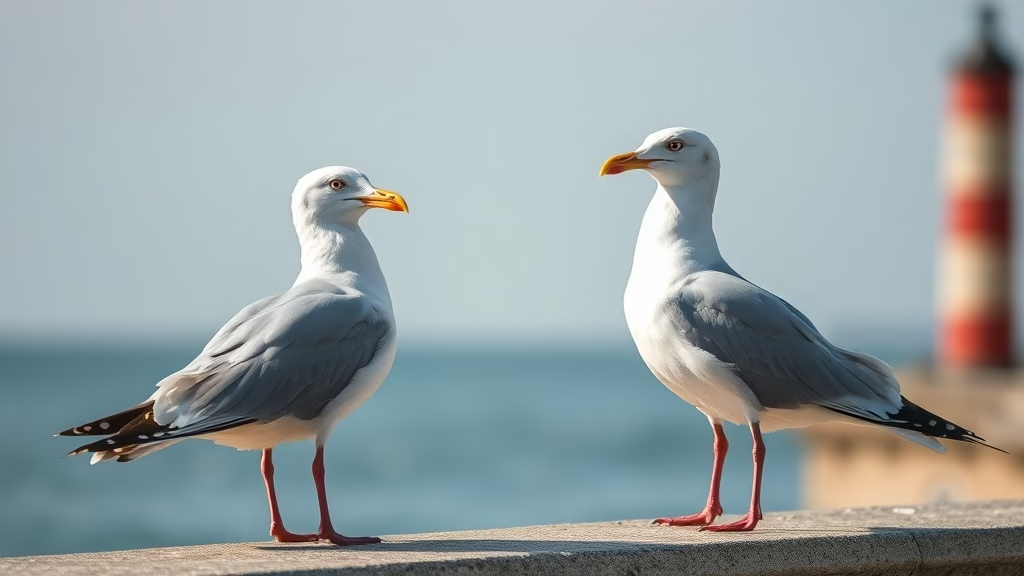
Representatives from the UK Coastal Gull Consortium announced this morning that the nation’s seagulls will be pursuing a comprehensive business restructure following three consecutive quarters of declining chip acquisition and what they described as “challenging market conditions in traditional opportunistic feeding sectors”.
The move comes as reduced tourist spending and a broader economic downturn have severely impacted the availability of discarded food waste in Britain’s seaside towns, forcing gulls to reconsider their long-standing reliance on what industry insiders refer to as the chip vertical.
Speaking at a press conference held on the roof of a Wetherspoons in Scarborough, Martin Hendricks, Chief Strategy Officer for Gull Operations Northern Region, outlined plans for immediate diversification into adjacent food categories.
We’ve had a good run with chips. Nobody’s denying that. But we’ve been over-exposed to a single revenue stream for too long, and frankly, stakeholder engagement has suffered. We’re looking very seriously at the bakery sector, particularly pasties and sausage rolls, as well as exploring opportunities in ice cream, which offers strong margins during peak summer months.
The consortium confirmed it has already begun pilot programmes in several coastal locations, with early results suggesting that ninety-nine flakes present a particularly attractive target demographic. Ice cream cones held by children under the age of seven have been identified as a key growth area, with initial stakeholder feedback described as “extremely vocal”.
Details of the restructure also include what Mr Hendricks termed “aggressive vertical integration” into the sandwich market, with particular focus on al fresco dining situations where customers have demonstrated reduced situational awareness.Benches near clifftops have been identified as priority locations for rollout.
However, the announcement has not been without controversy. Susan Garrett, a representative from the Brighton and Hove branch, expressed concern that the new strategy fails to address underlying operational challenges.
It’s all very well talking about diversifying into bakery goods, but we’re still facing the same fundamental issues. Fewer tourists means fewer targets overall, regardless of what they’re eating. We’ve suggested exploring municipal waste opportunities and car park dropped items, but apparently that doesn’t align with the premium brand positioning they’re going for.
The consortium insisted that the changes represent a natural evolution rather than a departure from core values, noting that aggressive swooping tactics and complete disregard for human distress would remain central to the organisation’s culture.
Implementation of the new strategy begins immediately, with full deployment expected by the May bank holiday weekend. Tourists are advised that all food items should now be considered at risk, and that holding things above your head no longer constitutes adequate protection.