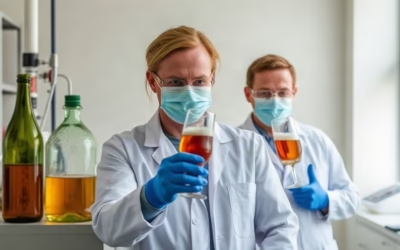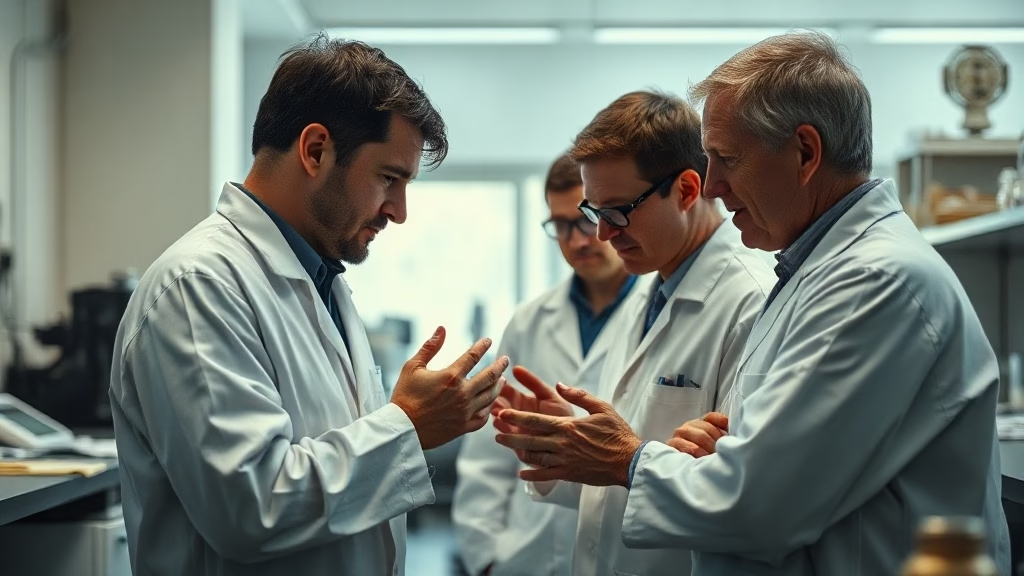
The final cohort of British scientists still conducting research on British soil have been observed gathering around a single Bunsen burner in a Cambridge laboratory, sources confirmed yesterday. The group, numbering approximately forty-seven across three departments, have been taking turns holding their hands over the flame between experiments.
The researchers, part of what conservationists are calling a “critically endangered population”, have seen their natural habitat steadily eroded since 2016. Funding has declined to the point where the biology department now shares one working microscope, three pipettes, and a centrifuge that only spins clockwise.
“We’ve had to make some difficult choices,” said Dr Jennifer Okafor, a molecular biologist who recently turned down a position at MIT to stay in the UK for family reasons. She has since described this as “the worst decision of my adult life, including my brief marriage to a crypto enthusiast.”
“Last month I had to choose between ordering the reagents I needed for my cancer research or paying to heat the lab above fourteen degrees. I chose the reagents. Three of my colleagues now have chilblains.”
The situation has become so dire that researchers have begun exhibiting behaviour previously unknown to science. One physicist was spotted conducting peer review in exchange for sandwiches. Two postdocs have moved into the building full-time, sleeping in a disused fume cupboard.
Professor Michael Cheswick, Vice-Chancellor of the university, defended the cuts during a video call from his holiday home in Tuscany. “Frankly, thermodynamics is overrated anyway,” he said, visible fireplace crackling in the background. “Our scientists are developing extraordinary resilience. Character building, really.”
When asked whether he considered the situation sustainable, Professor Cheswick noted that the university had recently invested in “several inspiring posters about innovation” and a new coffee machine for the senior common room.
The laboratory’s heating budget was cut by ninety-two percent in the last fiscal year. The remaining eight percent covers heat for the administrative offices, which sources say are “borderline tropical”.
Meanwhile, researchers report that their European and American counterparts have begun leaving food out for them. One scientist described receiving a care package from a former colleague in Berlin containing fresh pipette tips, functional equipment, and photographs of laboratories where the temperature exceeds sixteen degrees.
“It’s humiliating,” Dr Okafor said. “But we did use the pipette tips.”
The group’s survival strategy now revolves around huddling in close proximity during the winter months and sharing body heat during particularly long grant application sessions. One researcher has begun bringing in a hot water bottle from home, which circulates around the lab based on a complicated rota system pinned to the wall beside the periodic table.
When reached for comment, a government spokesperson said the UK remained “a science superpower” and pointed to the nation’s proud history of discovery, including penicillin, the structure of DNA, and several other things that happened quite a while ago.
At time of publication, two more scientists had booked one-way flights to Boston.