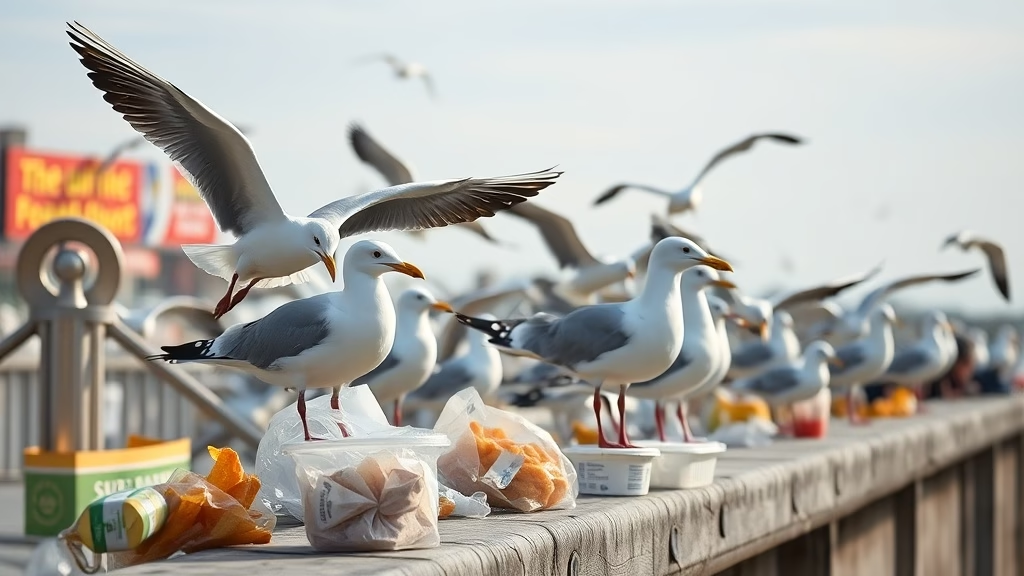
The National Union of Gulls and Allied Coastal Workers has today announced a programme of coordinated industrial action following what it describes as the systematic erosion of traditional food waste streams across Britain’s high streets.
The union, which represents an estimated 740,000 herring gulls, black-backed gulls and associated scavenging birds, voted by 87 per cent in favour of action after several quarters of declining chip shop waste, reduced kebab meat availability and what branch secretary Derek Hutchins called “a catastrophic reduction in discarded saveloy access”.
The dispute centres on the closure of approximately 340 fish and chip shops over the past eighteen months, coupled with rising costs that have led to smaller portion sizes and increased consumer awareness about not leaving food on outdoor tables. Union representatives argue that these market pressures have created an untenable working environment for birds who have, for generations, relied on the predictable bounty of the British takeaway economy.
“We are not asking for special treatment,” said Sandra Pembridge, a fifteen-year-old lesser black-backed gull who has worked the Margate seafront since 2017. “We are simply requesting that the government acknowledge our sector and the very real challenges we face. My grandmother raised four chicks on a single summer of cod scraps and battered sausage ends. I can barely find enough curry sauce-soaked chips to see me through a weekend.”
The action, which begins on the May bank holiday, will involve coordinated withdrawal of labour from traditional scavenging locations, aggressive early-morning crying outside the homes of local councillors, and what the union terms “strategic defecation operations” targeting areas of high tourist footfall.
A secondary dispute has emerged over the increasing prevalence of craft burger restaurants and artisan coffee shops, which union officials argue produce waste that is both less calorific and more difficult to extract from sophisticated receptacles. The rise of biodegradable packaging has also been cited as a contributing factor to what older gulls describe as a profession in terminal decline.
Graham Whitfield, who has managed the BrightSea Fryer in Southend for twenty-three years, expressed sympathy with the union’s position while noting that his own margins had become increasingly difficult. “I’m down to cooking three times a week,” he said. “The seagulls aren’t the only ones struggling. Though I’ll admit they’ve made their feelings known. One of them got through an air vent last Tuesday and wouldn’t leave until I’d put out half a cod.”
The Department for Environment, Food and Rural Affairs declined to comment on the dispute, noting only that it does not negotiate with unregistered labour organisations, particularly those unable to complete the relevant paperwork without opposable thumbs.