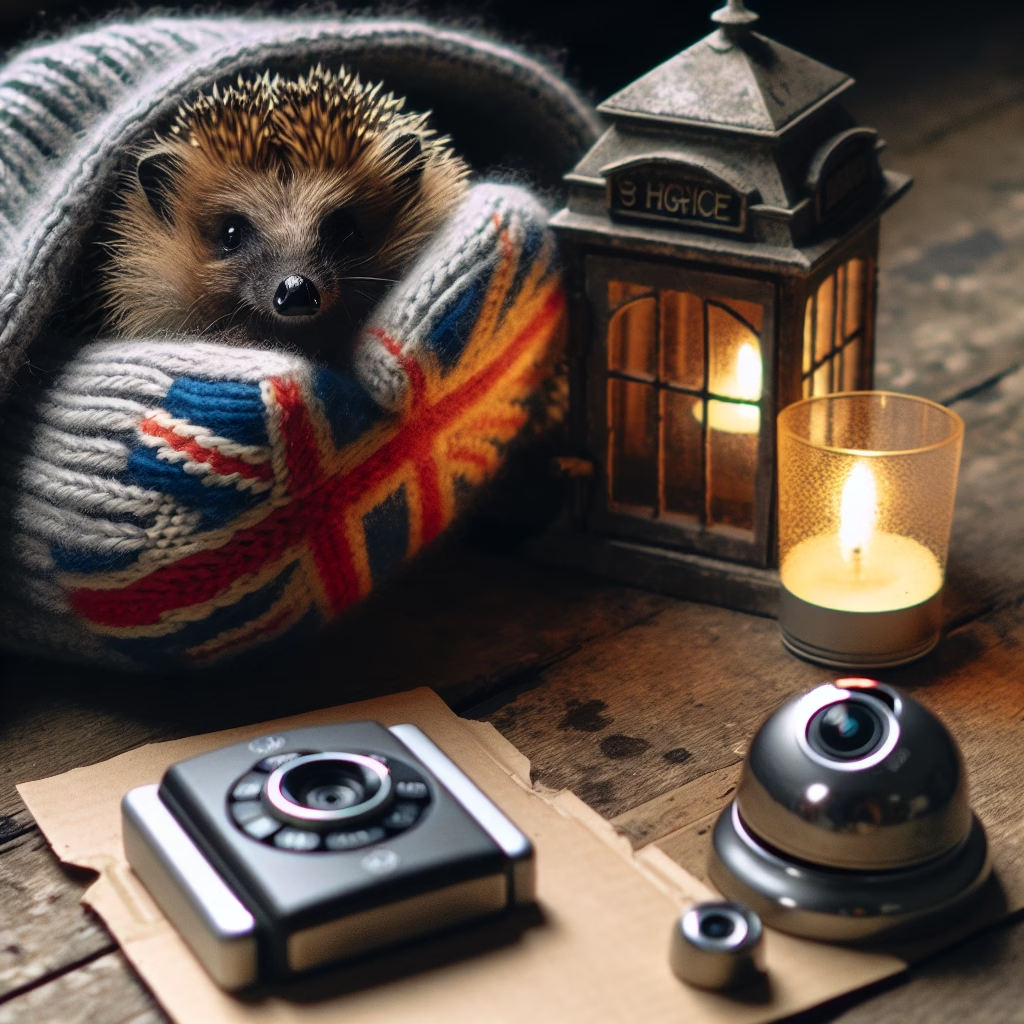
A three-year study by the University of Bristol has concluded that Britain’s hedgehog population is experiencing widespread sleep disruption caused by the nation’s 6.8 million video doorbells. The research, which tracked forty-two hedgehogs across suburban Bristol, found that 89% displayed symptoms consistent with performance anxiety and chronic light exposure.
The hedgehogs, formerly capable of hibernating for up to five months, are now waking an average of seventeen times per winter. Most disturbances occur between 11pm and 4am, coinciding with peak motion-sensor activity from garden security devices.
“We initially attributed the population decline to habitat loss,” said Dr Emma Pritchard, lead researcher at Bristol’s School of Biological Sciences. “Then we noticed the hedgehogs were spending significant portions of the night frozen in doorbell camera view, apparently aware they were being watched. One individual remained motionless for forty-three minutes outside a property in Bishopston.”
The study found that hedgehogs in areas with high doorbell camera density showed elevated cortisol levels and disrupted circadian rhythms. Several subjects abandoned hibernation attempts entirely, instead maintaining a state researchers described as “fitful semi-consciousness punctuated by bursts of unnecessary vigilance.”
Ring, the doorbell manufacturer owned by Amazon, has disputed the findings. A company spokesperson noted that their devices have helped reunite over 200,000 families with footage of hedgehogs they didn’t know were in their gardens.
“The hedgehogs aren’t anxious, they’re famous,” said Martin Hesketh, a software developer from Cheltenham who has posted sixty-four hedgehog videos to a dedicated Instagram account. “Dave, that’s what I call him, knows exactly where the camera is. He performs.”
The research also documented secondary behavioral changes. Hedgehogs in camera-monitored areas were observed taking circuitous routes to avoid motion sensors, adding an average of twelve metres to their nightly foraging patterns. Three subjects in the study appeared to have learned the optimal angle to remain undetected, suggesting, Dr Pritchard noted, “a level of technological adaptation we frankly didn’t think they were capable of.”
“We’re essentially asking a nocturnal mammal to navigate an environment of perpetual surveillance and unpredictable illumination,” said Professor James Woodford of the Mammal Society, who was not involved in the study but has strong opinions about it. “It’s like trying to sleep in a Tesco Metro at 2am. Technically possible, but nobody’s best self emerges from the experience.”
The Department for Environment, Food and Rural Affairs has acknowledged the findings but stopped short of recommending any changes to doorbell camera usage. A consultation on hedgehog-friendly motion sensor settings is expected sometime in 2026, possibly later.