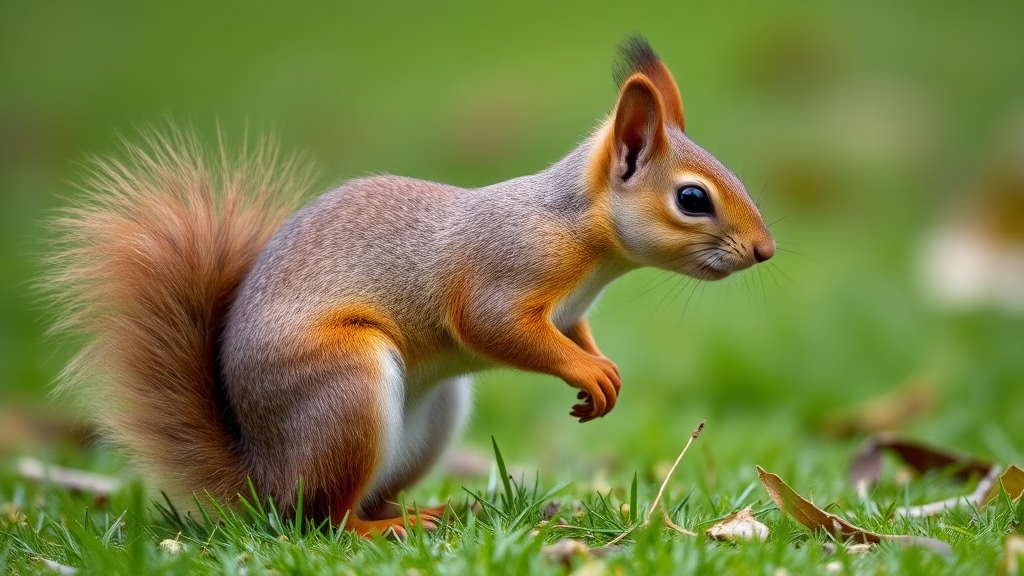
The Office for National Statistics has confirmed that approximately 2.7 million squirrels across England, Scotland and Wales will be reclassified as economically inactive in quarterly labour market figures beginning this autumn, bringing them into line with other segments of the population who are neither in work nor seeking employment.
The move follows a comprehensive review of how wildlife populations should be reflected in official statistics. Grey squirrels, which have long been considered a problematic demographic due to their impact on native red squirrel populations, will now be subdivided into those who are economically inactive due to long-term illness, those caring for other squirrels, and those who have simply given up looking for work.
Red squirrels, whose numbers have declined to around 287,000, will be classified as economically inactive due to structural barriers in the labour market, with a footnote acknowledging that their participation rate has been affected by competitive pressures from grey squirrels willing to accept lower wages and worse conditions.
Jennifer Hayward, senior statistician at the ONS, said the reclassification would provide a more accurate picture of inactivity across the United Kingdom. “We’ve been tracking economically inactive households for years, and it became clear that we were missing a substantial cohort,” she said. “These squirrels are not contributing to GDP. They’re not paying national insurance. Many of them are living in social housing, by which I mean trees in public parks.”
The data will also distinguish between squirrels who are temporarily out of the workforce due to seasonal factors, such as hibernation, and those facing longer-term barriers to employment. A small subset of squirrels who engage in activities that could be considered work, such as seed dispersal or appearing in National Trust promotional materials, will be classified as self-employed, though HMRC has indicated these squirrels may face retrospective tax bills.
Conservation groups have responded to the announcement with confusion. Martin Eccleston, policy director at Red Squirrel Survival Trust, said his organisation had been lobbying for increased habitat protection, not statistical recognition. “We’re trying to prevent a species from going extinct, not get them onto Universal Credit,” he said. “Though I suppose if it means more funding from the Department for Work and Pensions, we’ll take what we can get.”
The ONS has indicated that the methodology could be extended to other wildlife populations in future releases. Badgers, deer and an estimated 73 million birds are all under consideration for inclusion in economic inactivity figures, though officials acknowledged that gathering accurate data from animals who do not respond to household surveys presents certain methodological challenges.
The Treasury has welcomed the statistical changes, noting that they will reduce the official unemployment rate by diluting the denominator. A spokesman said the government remained committed to getting squirrels back into work, but only if suitable opportunities in the acorn sector became available.