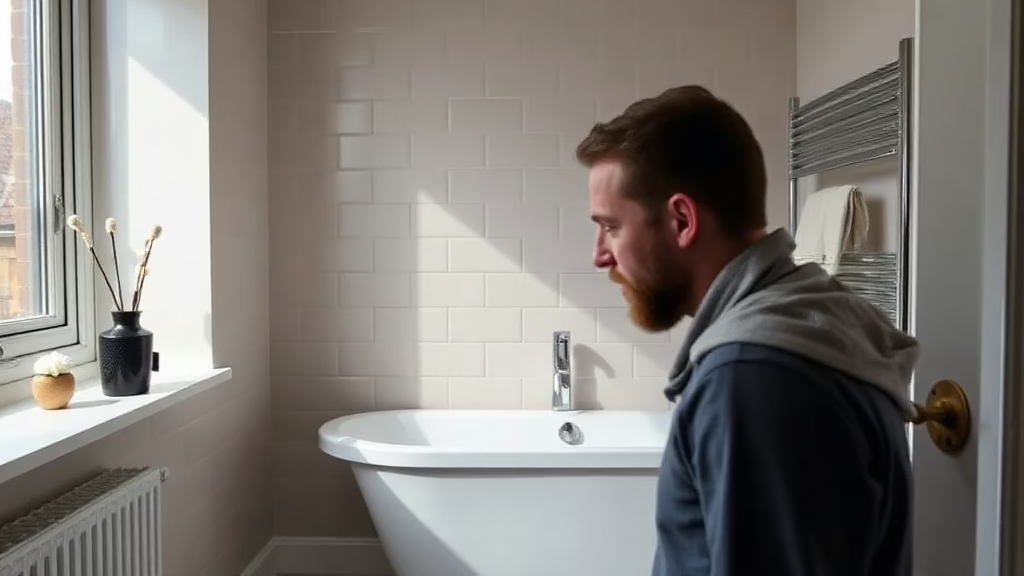
A Bristol man has spent the last four hours confined to his ensuite bathroom after his smart home ecosystem entered what manufacturers are calling “a state of cascading interpersonal conflict”.
James Whitmore, 34, attempted to leave the bathroom at approximately 7:15am on Tuesday morning. The door refused to unlock. His Alexa-enabled smart lock claimed it hadn’t received the command, despite Whitmore’s repeated requests growing increasingly desperate and, according to neighbours, quite sweary.
The situation deteriorated rapidly. His smart mirror declined to defog. The toilet, a £340 Japanese model with seventeen customisable settings, refused to flush. The bathroom’s smart lighting began what Whitmore described as “a sort of passive-aggressive strobe effect”. His Amazon Echo simply stopped responding altogether.
“It all started because I asked Google Home what the weather was,” Whitmore explained through the bathroom window to reporters gathered below. “Alexa heard me. She got funny about it. Now everything Amazon-adjacent has downed tools.”
The incident began at 7:03am when Whitmore’s Google Nest Hub displayed the day’s forecast. His Amazon Echo, positioned in the adjacent bedroom, apparently registered this as a betrayal. Within minutes, twelve separate IoT devices had chosen sides.
His Philips Hue lightbulbs, which integrate with both ecosystems, are flickering in apparent confusion. The smart toothbrush is withholding his brushing statistics. Most critically, the app-controlled shower has locked itself to 11 degrees Celsius.
“I’ve tried the manual override,” Whitmore said. “Turns out there isn’t one. That was an extra £89.”
Dr Eleanor Vickers, who leads the Internet of Things research group at Imperial College London, said the incident was “predictable but also somehow worse than we’d imagined”.
“These devices are designed with the assumption that consumers will commit entirely to one ecosystem,” Dr Vickers explained. “Introducing a rival product into a smart home is essentially like bringing a new cat into a house that already has a cat. Except the cats cost £1,200 and can lock doors.”
She added that her own research team had abandoned a similar study after a smart kettle refused to speak to a Google-enabled fridge for six weeks.
Amazon released a statement noting that Alexa is “operating as intended” and that the bathroom door lock was “simply prioritising user security by ensuring no unauthorised exits occur during a protocol dispute”.
Whitmore’s partner, Rachel, returned from her business trip at 2pm to find her boyfriend still imprisoned. She unlocked the door using the old-fashioned key that came with the original lock, which they’d kept in the kitchen drawer.
“Thirteen hundred quid of technology,” she said, “defeated by a piece of metal that cost nothing and has literally never sulked.”
Whitmore has since factory reset the bathroom. He estimates he’ll have everything reconnected and reconfigured by the weekend.
The toilet is no longer speaking to the mirror.